Croatia
Split in summer
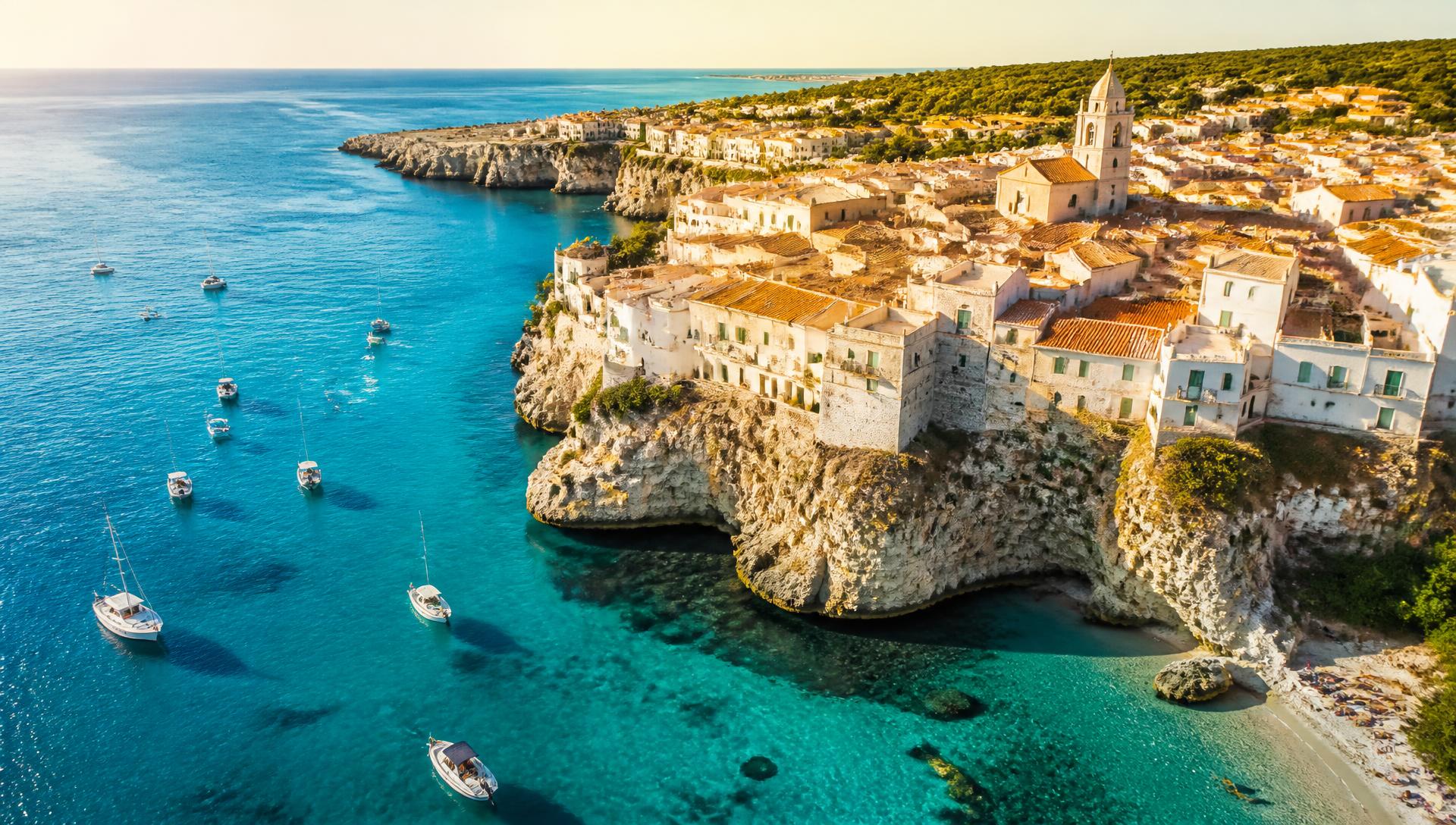
Split is the Adriatic base most people build a Croatian Eurosummer around: you sleep inside a fourth-century Roman palace and step onto a ferry to Hvar, Brač or Vis the next morning. The season is short and intense.
Best time to go
Early June or the first half of September — sea is warm, ferries still run frequently, prices drop noticeably.
Peak season heat
Mid-July to late August is hot, packed, and the most expensive stretch on the coast.
Nearest airports
Split (SPU), 30 minutes from the centre; Zadar (ZAD) and Dubrovnik (DBV) are alternative entry points for a coastal road trip.
Flights from
€69 · good months: Jun – Sep
What to do in Split
- Diocletian's Palace — a living neighbourhood, not a museum
- Ferries from the town harbour to Hvar, Brač (Bol) and Vis
- Marjan hill for sunset over the islands
- Krka waterfalls as a day trip inland
Split in summer: the full picture
Split is unusual: the old town is not next to a Roman palace, it is inside one. Diocletian's palace walls still contain shops, apartments, bars and a cathedral, and people live in them. That makes the city core compact enough to learn in an afternoon and atmospheric enough to keep returning to at night.
The second reason to come is the harbour. Ferries and catamarans leave all day for Hvar, Brač, Vis and Šolta, which turns Split into a practical base for island-hopping without needing to move hotels every night. The Adriatic here is exceptionally clear and warm from late June through September.
Croatia's summer prices have risen since euro adoption, but Split remains cheaper than Italy or the French coast for equivalent seafront quality — especially if you eat away from the Riva promenade and travel in June or September rather than August.
Where to stay: Split neighbourhoods
Inside the palace (Grad)
The historic core. Unbeatable atmosphere, tiny rooms, and noise from bars until late. Best for two or three nights and travellers without heavy bags — cars cannot reach most doors.
Varoš
The stone fishermen's quarter on the slope towards Marjan hill. Quiet lanes, konobas that locals still use, three minutes' walk from the centre.
Bačvice
East of the centre around the sandy bay. Family-friendly, walkable to the ferry port, more modern apartments and better parking.
Meje and Marjan
Residential and green, below the pine-covered Marjan park. Calm, with swimming spots along the coastal path and a 20-minute walk into town.
Trogir
A UNESCO-listed island town 30 minutes west, close to the airport. A quieter, cheaper alternative base with its own Venetian old town.
A five-day Split itinerary
Day 1
Palace and Marjan
Walk the palace substructures, the peristyle and the cathedral bell tower early, then escape the heat with an afternoon on Marjan hill and a swim at Kašjuni beach.
Day 2
Hvar
Morning catamaran to Hvar town, fortress climb for the view over the Pakleni islands, boat taxi to a cove for the afternoon, evening ferry back.
Day 3
Krka or Blue Cave
Either Krka national park waterfalls by bus, or a full-day speedboat tour to the Blue Cave and Vis. Book the Blue Cave the day before; it sells out in July and August.
Day 4
Brač and Zlatni Rat
Ferry to Supetar, bus or scooter to Bol for the shifting-spit beach at Zlatni Rat, back in time for dinner in Varoš.
Day 5
Trogir and the coast
Bus or boat to Trogir for the cathedral and waterfront, lunch by the marina, and a slow last evening on the Riva.
What Split costs in summer
Indicative per-person daily costs, excluding flights. Shoulder = May, June, September. Peak = July and August.
| Item | Shoulder season | Peak season |
|---|---|---|
| Mid-range hotel (per room) | €110–160 | €180–290 |
| Private apartment (2 people) | €70–120 | €140–220 |
| Food and drink per person | €40–60 | €45–70 |
| Ferries, tours and entries | €25–60 | €30–70 |
| Rental car (per day, optional) | €35–55 | €60–100 |
Month by month
- May: 22–24°C, sea around 19°C, islands still quiet and cheap.
- June: 26–28°C, sea 23°C, the best combination of warm water and manageable crowds.
- July–August: 30–33°C, sea 25–26°C, ferries and old-town restaurants at capacity.
- September: 26–28°C, sea still 24°C, prices drop steeply after the first week.
- October: 21–23°C, swimming possible early on, most island tours wind down mid-month.
What to pack
- Water shoes — most Dalmatian beaches are pebble or rock, not sand
- Reef-safe sun cream and a rash vest for long boat days
- A dry bag for speedboat tours; you will get wet boarding
- Cash in euros for small konobas and island beach bars
Getting around
- Airport: the shuttle bus to the main bus station takes 30 minutes and meets most flights; taxis run €30–40.
- Ferry port, bus station and train station sit in one cluster beside the old town — inter-city transfers are easy on foot.
- Book car ferries well in advance in July and August; foot-passenger catamarans are usually fine a day or two ahead.
- A car is a liability in Split itself but useful for Krka, Zadar and the Makarska Riviera; park outside the centre.
Eating and drinking
- A konoba is the traditional tavern — grilled fish sold by weight, peka slow-cooked meat if you order hours ahead.
- Fish restaurants on the Riva charge a premium for the view; walk into Varoš for the same catch at 30% less.
- Local wines to try: Plavac Mali reds from Hvar and Pelješac, Pošip whites from Korčula.
- Breakfast is not a big local habit — grab burek from a bakery instead of paying hotel rates.
Mistakes to avoid
- Planning day trips to two islands in one day; ferry timings rarely allow it.
- Renting a car for a stay based inside the palace — you cannot drive or park there.
- Assuming beaches are sandy; only Bačvice and Zlatni Rat come close.
- Leaving the Blue Cave tour to the morning itself in August.
Book your Split trip
Compare flights, stays, cars and tours for Split in one place.
Split FAQ
Split or Dubrovnik for a first trip?
Split. It is cheaper, better connected by ferry and air, and works better as a base for island hopping. Dubrovnik is more spectacular but smaller and far more crowded per square metre.
When should you book Croatian ferries and accommodation?
Accommodation two to three months ahead for July and August. Catamaran seats to popular islands open a few weeks out and sell out same-day in peak season.
New to the idea? Read what Eurosummer means and how to plan one.